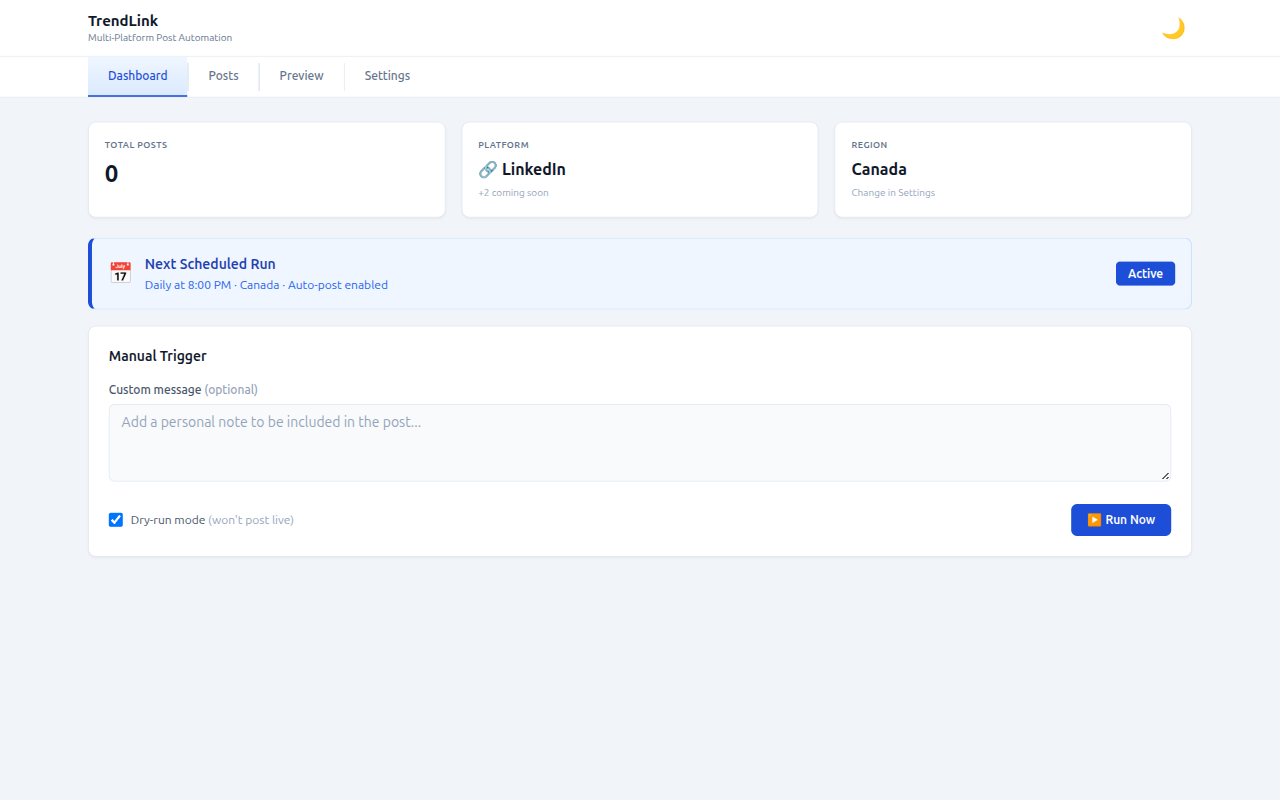
Live
TrendLink
Automated LinkedIn post scheduler that uses LangGraph + Claude to find trending IT news, generate relevant posts, and publish them daily on AWS.
Darshil Kapadia / AI EngineerOpen to conversations
10+ years at IBM India, M.Tech from IIT Kharagpur. I architect end-to-end AI solutions for global enterprises — MLOps, model train & fine-tune, and orchestrating AI agents at enterprise scale, secured under a responsible-AI framework, on AWS and Azure.
My work spans the full stack of applied AI — classical ML and deep learning, computer vision and OCR, NLP, and Generative AI with RAG and AI agents. I've taken these to production for global enterprises — PepsiCo, Bacardi, Dow Chemicals, JSW, the FAA, NedBank, and Iffco-Tokio — owning the lifecycle end to end: data pipelines, training and fine-tuning, MLOps, AI evaluations, and responsible-AI guardrails, deployed on AWS and Azure.
Decoder-only transformers trained on next-token prediction. State of the art for open-ended generation, reasoning, and instruction following.
Bidirectional transformers that produce rich contextual embeddings. Best suited for classification, NER, and semantic similarity.
Seq2seq architecture mapping input sequences to output sequences. Used for summarisation, translation, and question answering.
Generative models that learn to reverse a noise process. State of the art for high-fidelity image and media synthesis.
Region-based and anchor-free detectors for localising and classifying objects in images. Applied in insurance claim assessment and industrial inspection.
Hierarchical spatial feature extractors. Backbone of most computer vision pipelines for classification and representation learning.
Recurrent architectures that model temporal and sequential dependencies. Applied in OCR, time-series analysis, and sequence labelling.
Attention-based architecture that unified NLP and vision. Trained via self-supervised objectives before task-specific fine-tuning.
Adversarial generator–discriminator framework for producing realistic synthetic data and high-quality image generation.
Message-passing networks that learn on graph-structured data — knowledge graphs, recommendation systems, and molecular modelling.
Policy optimisation through environment interaction. Underpins LLM alignment (RLHF) and sequential decision-making agents.
Compressing large teacher models into faster, smaller student models while preserving accuracy — critical for production deployment.
Classical algorithms for structured and tabular data. Fast to train, interpretable, and often the right tool before reaching for deep learning.
Hands-on experience with core AWS services for data engineering, ML workloads, and application infrastructure.
Deep production experience across the Azure ecosystem — from ML pipelines and vector search to DevOps and real-time compute.
 Databricks Certified Generative AI Engineer AssociateDatabricksMay 2026
 IBM Generative & Agentic AI Expert — Data ScientistIBMSep 2025
 AWS Partner: Agentic AI EssentialsAmazon Web ServicesNov 2025
 AWS Partner: Generative AI EssentialsAmazon Web ServicesOct 2025
 Deep Learning SpecializationDeepLearning.AISep 2020Generative AI with Large Language ModelsDeepLearning.AIJan 2024
Enterprise work at IBM is under NDA — these are the pieces I can show in the open.
Automated LinkedIn post scheduler that uses LangGraph + Claude to find trending IT news, generate relevant posts, and publish them daily on AWS.
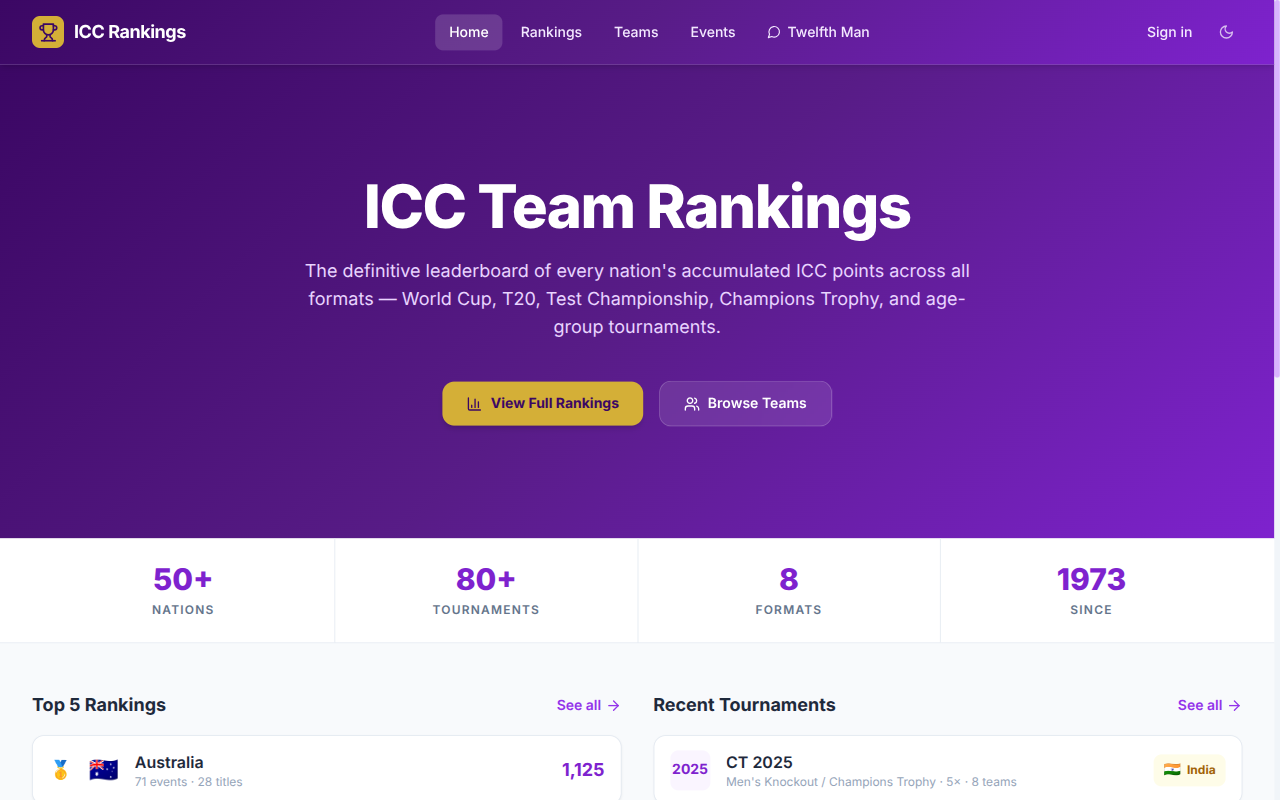
Full-stack ICC cricket points tracker covering 1973–2025, with a Google-authenticated AI chatbot that answers natural language questions over live tournament data.
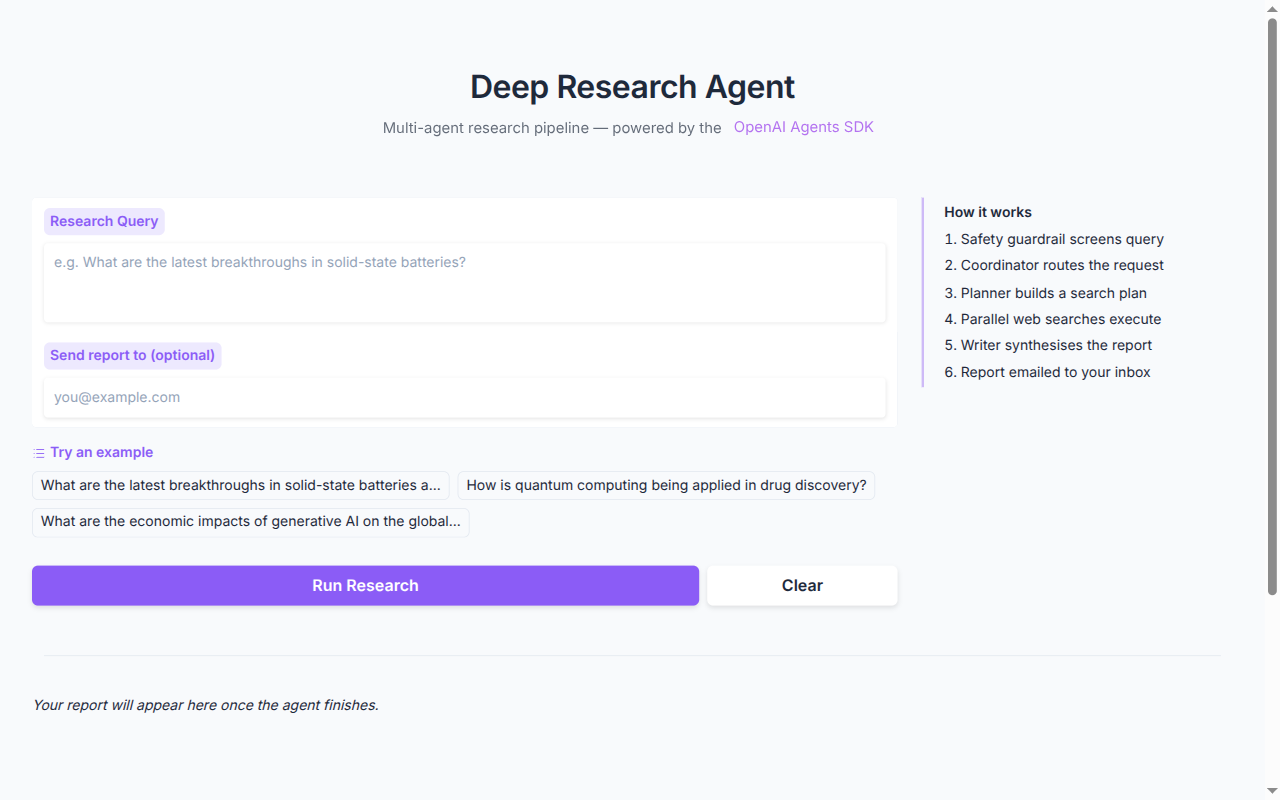
OpenAI Agents SDK demo — a 6-agent research pipeline that decomposes a query, runs parallel web searches, and emails back a structured long-form report.
Notes on shipping AI to production — fine-tuning, agents, evals, and the unglamorous MLOps in between.
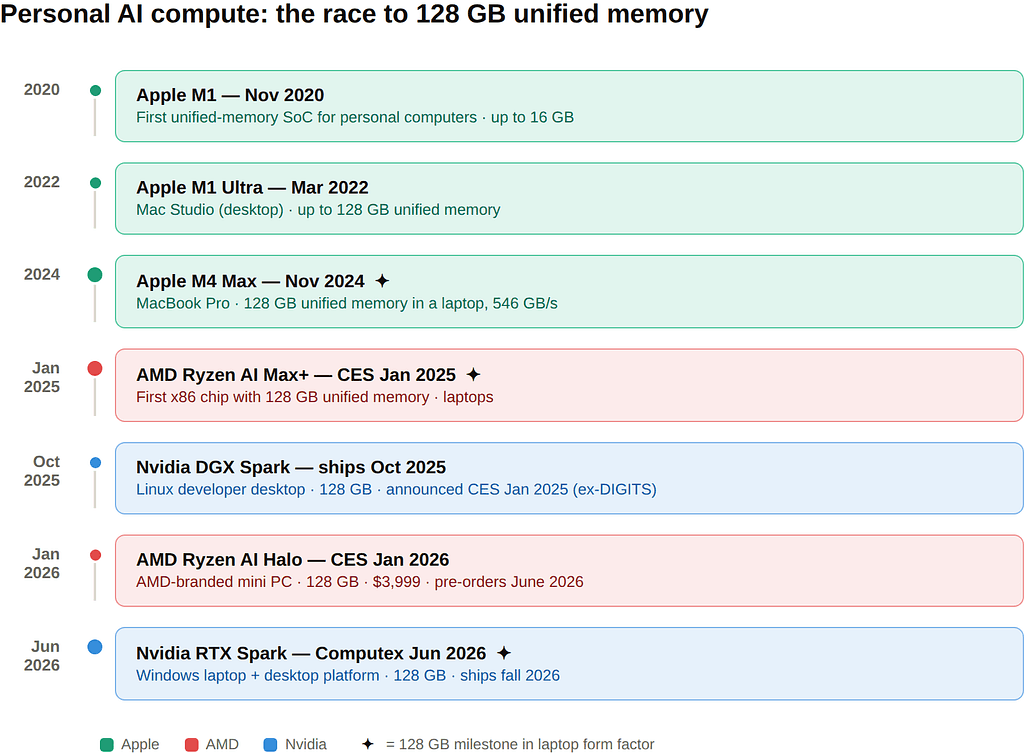
Every January, the tech world wakes up, flies to Las Vegas, and pretends CES is where history gets made. Sometimes it does. Sometimes it’s just expensive…
API Gateway vs ALB — the AWS confusion nobody warns you about API Gateway and Application Load Balancer (ALB) get mixed up all the time, and it is easy to see…
Post 2 of a hands-on series on building agents with LangGraph and Databricks. The reflection that kicked this off is here . In my last post I wrote about three…

Three things I would build differently today, and the lesson it took me a certification to see. Recently I cleared the Databricks Generative AI Engineer…